


Royal Decree-Law 7/2026: a new regulatory and fiscal framework for energy in Spain
Published on 24 March 2026
The legislation, passed in response to the conflict in the Middle East, introduces significant structural measures to accelerate the roll-out of renewable energy in Spain, including new deadlines and milestones for renewable energy projects, the creation of Renewable Energy Acceleration Zones, and the suspension of deadlines for meeting administrative milestones in the event of injunctions.
Royal Decree-Law 7/2026 of 20 March, approved in the context of the Comprehensive Plan to Respond to the Crisis in the Middle East (the “RDL 7/2026”), combines short-term measures to cushion the impact on consumers and exposed sectors with a structural package aimed at accelerating electrification, the roll-out of renewables and storage. This new legislation introduces a package of measures with a direct impact on the processing, development and grid integration of renewable energy projects, with a particular focus on (i) the review of administrative milestones and deadlines; (ii) the management of the effects of litigation through the automatic suspension of deadlines for meeting administrative milestones in the event of interim injunctions; (iii) the promotion of storage; (iv) new spatial planning and management instruments such as Renewable Acceleration Zones and the periodic review of grid planning; (v) significant changes to collective self-consumption and energy communities; and (vi) obligations regarding biomethane and sustainability criteria for data centres. The main new developments are analysed below.
A) Readjustment of administrative milestones and extension of deadlines for renewable energy projects. Milestones for access and demand connection permits
Article 25 of RDL 7/2026 allows facilities with access and connection permits issued after 27 December 2013 to request an extension of the deadline for the fifth milestone, setting 31 December 2030 as the latest date. The application mechanism for this new extension of the fifth milestone is in line with the procedure previously approved in Royal Decree-Law 8/2023.
This time, as a new feature and in order to have more up-to-date information on the commissioning of the various production and storage projects, monthly reporting obligations are established for the Autonomous Communities regarding extensions granted for facilities with a capacity exceeding 5 MW.
A transitional regime of automatic expiry is also provided for demand permits granted prior to the entry into force of the regulation which have not yet formalised an access contract for the contracted capacity. Specifically, the following deadlines are set: payment of 10% of the grid position within 12 months of the permit being granted; the signing of the Project Assignment within 3 years; and the signing of the Technical Access Contract within 4 years. These interim milestones aim to free up grid capacity without having to wait for the general expiry period (5 years).
B) Automatic suspension of deadlines in the event of interim measures
A new subsection (bis) is added to Article 1 of Royal Decree-Law 23/2020, establishing the automatic suspension of the calculation of administrative milestones whenever precautionary measures—whether administrative or judicial—are in place that suspend the validity of the project authorisations, and until such precautionary measures are lifted.
This provision responds directly to the growing litigation that has affected renewable energy projects in recent years, where the imposition of interim measures had been penalising developers, who saw the deadlines for milestones passing despite the fact that the processing of their project was paralysed by a judicial or administrative decision.
C) Promoting storage (pumping and flexible permits)
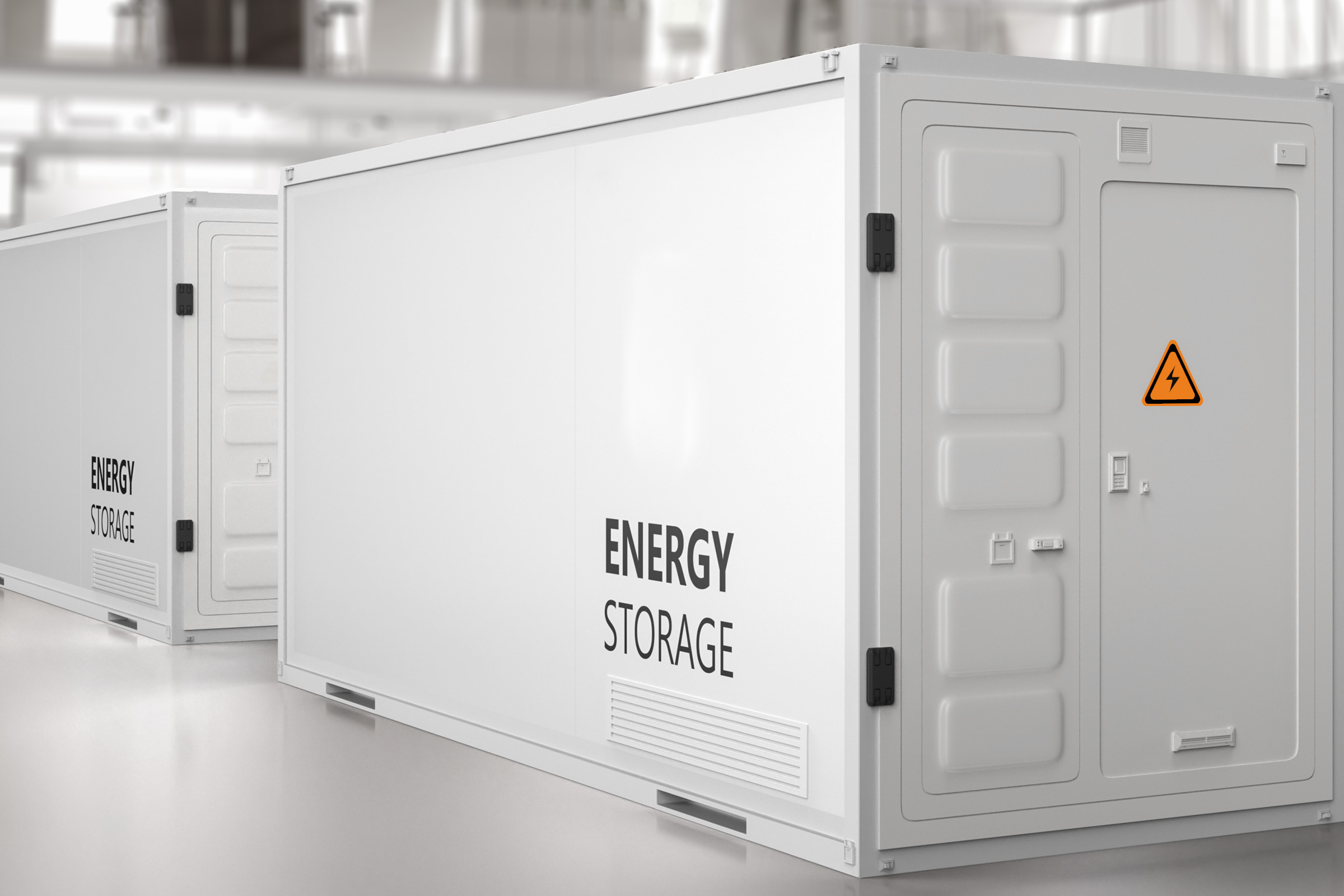
Royal Decree-Law 7/2026 amends the Electricity Sector Act in relation to access and connection permits for storage facilities, which will be treated as flexible access permits from a demand perspective, thereby adapting the regulatory framework to the bidirectional nature of these facilities. It highlights the inherent flexibility of these facilities, which should be taken into account when assessing grid capacity, emphasising their ability to support the system by enabling existing grid capacity to be utilised.
Furthermore, the public utility of pumped-storage facilities is expressly declared, which facilitates the processing of new pumped-storage projects and reinforces their capacity to support the integration of renewable energy into the electricity system.
D) Capacity reservation fee for access to the networks for demand facilities
Holders of access and connection permits for consumption facilities with a connection point at a voltage of 1 kV or higher must pay a fee to the relevant network operator for capacity reservation, which replaces the financial guarantees required for the processing of access and connection procedures for demand facilities. This fee shall be determined on the basis of the values of the power terms of the transmission and distribution tariffs, multiplied by a factor k, the value of which is provisionally set in the first transitional provision of RDL 7/2026, and which shall apply until it is determined by the Secretary of State for Energy.
This fee will be partially offset (100% of the amount paid in the first year of payment of the fee, and 80% of the amounts corresponding to the remaining years) against the transmission and distribution tariffs to be paid by the consumer facility following its commissioning.
The Explanatory Memorandum of RDL 7/2026 provides for exemption from payment of this fee for storage facilities (which would thus be subject only to the guarantee fee in respect of the generation component). However, the provisions of the regulation do not elaborate on this exemption.
Failure to pay the fee for the access capacity reserve may result in the automatic expiry of access and connection permits. In any event, such permits shall automatically expire where the non-payment, in a calendar year, exceeds 10% of the amount due.
Furthermore, the fifth transitional provision establishes a transitional regime for demand and storage facilities with guarantees already deposited, so that they may request a refund of these guarantees from the moment the cumulative payment of the capacity reservation fee exceeds €40/kW.
E) National framework for Renewable Acceleration Zones
RDL 7/2026 incorporates a basic national framework for the creation of Renewable Acceleration Zones (ZAR), transposing Directive (EU) 2023/2413 (known as DER III), establishing minimum criteria, environmental restrictions and public participation requirements for subsequent implementation by the Autonomous Communities.
RZAs are defined as onshore locations particularly suitable for the installation of renewable infrastructure —including, where applicable, hybrid electrochemical storage— with specific and accelerated processing procedures. Thus, minimum criteria are established for their demarcation, such as the exclusion, in all cases, of protected areas (Natura 2000 Network, National Parks, etc.) and the prioritisation of industrial or artificial land, degraded areas and existing corridors or infrastructure, amongst others.
Pursuant to Article 19 of the Royal Decree-Law, the designation of ZARs shall be the responsibility of the Autonomous Communities, following a report from MITECO, with prior public participation and a strategic environmental assessment. The procedure, criteria and deadlines for the designation of ZARs are yet to be determined by regulation.
As a key effect, it is envisaged that projects located in ZARs will not be subject to either standard or simplified environmental impact assessments, without prejudice to the requirement to adopt the preventive and mitigating measures that are established. This regime will not apply to projects affecting the Natura 2000 network or which may have cross-border impacts.
F) Collective self-consumption within a 5 km radius and regulation of Energy Communities
The explanatory memorandum to Royal Decree-Law 7/2026 provides for an extension to 5 kilometres of the maximum permitted distance between generation points and consumption points in collective self-consumption, and allows for the combination of different forms of self-consumption within the same installation. This change, however, has not been incorporated into any of the articles of the published regulation.
On the other hand, the Electricity Sector Act is set to incorporate the new role of ‘self-consumption manager’, who will be able to represent the interests of consumers associated with a self-consumption installation and carry out the necessary procedures to ensure its proper functioning.
Furthermore, the tenth additional provision approves the release of 10% of the capacity reserved at generation interconnection points for allocation to renewable installations associated with self-consumption, subject to specific conditions, with a temporary regime of two years and automatic expiry in the event of non-compliance with certain requirements.
As regards energy communities, the Government is mandated to approve, within three months, a royal decree setting out the regulations for both Renewable Energy Communities and Citizen Energy Communities.
Furthermore, the promotion of and participation by local councils in citizen energy communities and renewable energy communities, as well as the adoption of measures relating to energy efficiency, electrification and self-consumption, are incorporated into municipal powers.
G) Mandatory biomethane targets and sustainability criteria for data centres
Biomethane
With the aim of continuing to make progress in the decarbonisation of the economy, RDL 7/2026 establishes an express mandate for the Government to set, by royal decree, mandatory annual targets for biomethane penetration for uses other than transport, regulating the obligated parties, the methodology for accreditation and monitoring, as well as a seal of social, territorial and environmental excellence that may be required of plants contributing to the fulfilment of these targets. To this end, the Hydrocarbons Sector Act is amended to incorporate a new penalty regime designed to encourage compliance.
Data centres
Given the high volume of access permits already granted to data centres, the regulation establishes sustainability criteria requiring new consumption to be offset by equivalent renewable generation, in order to avoid increased gas use and the consequent rise in electricity prices for all consumers.
Specifically, the first additional provision provides that a Royal Decree shall approve the energy and environmental sustainability, resilience and digital sovereignty requirements applicable to data processing centres connected to the grids, including criteria of additionality and hourly correlation with renewables; and that failure to comply with these requirements may result in the loss of permits and/or penalties as may be determined.
H) Periodic review of network planning (every two years)
The Royal Decree-Law also amends the Electricity Sector Act to require specific amendments to electricity planning to be carried out at least every two years, to expand the scope of matters that may be incorporated through such amendments, and to establish the obligation to initiate new planning within a maximum period of three years from the last approved plan.
This greater flexibility in reviewing network planning is essential to ensure that the transmission infrastructure can keep pace with the roll-out of renewables, reducing the bottlenecks that currently delay the connection of new installations.
Should you wish to find out more about the changes introduced by Royal Decree-Law 7/2026 of 20 March, approving the Comprehensive Plan for the Response to the Crisis in the Middle East, or regarding any other matters relating to Public Law and Regulated Sectors, please do not hesitate to contact one of our experts listed below or your usual contact at Osborne Clarke.