

The Energy Transition | UK government announces results of record-breaking CfD AR7 auction
Published on 20 January 2026
Welcome to our top picks of the latest energy regulatory and market developments in the UK's transition to net zero
This week, we look at offshore wind securing a record-breaking 8.4GW of capacity in CfD AR7, NESO's 2025 Review, revised FAQs clarifying licence-exempt electricity supply arrangements following BSC modification P442, and DESNZ's assessment on hydrogen-to-power deployment.
Offshore wind secures a record breaking amount of capacity in the latest CfD round
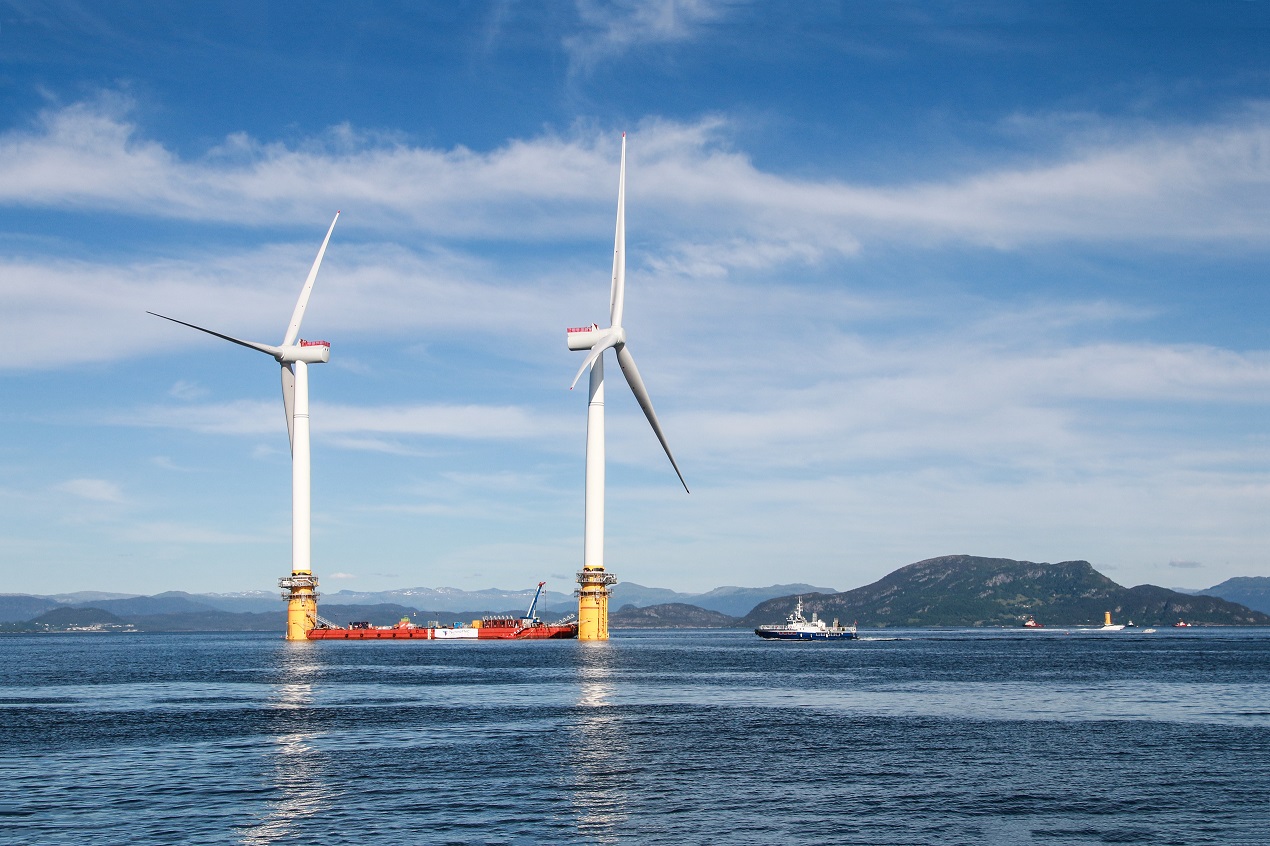
On 14 January 2026 the Department for Energy Security and Net Zero (DESNZ) announced the results of its CfD AR7 offshore wind auction. It awarded a record breaking 8.4GW of capacity to a mixture of fixed bottom and floating offshore wind projects. DESNZ cites this as the biggest single procurement of offshore wind in British and European history and states it is a crucial step towards delivering the government's clean power by 2030 mission.
These results represent a significant milestone in strengthening the UK's energy security by reducing its reliance on volatile fossil fuels. The government hopes the AR7 offshore wind results will create more stable and competitive energy prices for consumers while demonstrating the UK's ability to manage rising electricity demand (expected to more than double by 2050) with cheaper and more reliable energy sources.
Offshore wind projects were successful in every part of the UK, including:
- Dogger Bank South off the coast of Yorkshire and Norfolk Vanguard off East Anglia;
- Berwick Bank in the North Sea, the first new Scottish project since 2022 and the largest planned offshore wind project in the world; and
- Awel Y Môr, the first Welsh project to win a contract in more than a decade.
Floating offshore wind in AR7 cleared at £216.49/MWh (2024 prices) compared with £194.97/MWh (2024 prices) for AR6. Offshore Wind Scotland in AR7 cleared at £89.94/MWh (2024) with all other Offshore Wind clearing at £91.20/MWh (2024 prices) against £77.50/MWh (2024 prices) for AR6. Notably both fixed bottom and floating offshore wind cleared well below the administrative strike prices for these technologies being £113/MWh and £271/MWh respectively.
Various reforms were made to the CfD auction process for AR7, including an initially low budget of £900 million for fixed-bottom offshore wind which was subsequently increased to £1,790 million. AR7 also saw an increase in CfD term length for various technologies to 20 years (up from 15 years under AR6) and floating off-shore wind having its own dedicated pot (Pot 4). Read more on the changes implemented for AR7 in our previous Insight.
The results of CfD AR7a, which covers all other technologies, are expected in early February.
NESO's 2025 review
The National Energy System Operator (NESO) has published Britain’s Energy Explained: 2025 Review. NESO presents 2025 as a pivotal year in Great Britain's transition towards a lower‑carbon electricity system; renewables (wind, solar, hydro and biomass) supplied a record 44% of GB electricity, over 127 TWh, which is roughly three times 2015 output and that, for the first time, no coal was used on the system across a full calendar year. On 1 April 2025, zero‑carbon sources met 97.7% of GB electricity demand over a 30‑minute period, exceeding the previous 95% record and evidencing the technical feasibility of very high zero‑carbon penetration, even if only for short durations.
Looking to the technology mix, wind remained the largest single source of electricity for the second consecutive year at 29.7% of total generation, ahead of gas at 26.8%.
| Source | Percentage of Total Generation |
| Wind | 29.7% |
| Gas | 26.8% |
| Imports | 15.1% |
| Nuclear | 11.8% |
| Biomass | 6.9% |
| Solar | 6.5% |
| Hydro | 1.6% |
| Storage | 1.6% |
Britain’s Energy Explained: 2025 Review
The review highlights widening demand swings and network constraints among NESO's key operational challenges last year. Peak demand reached 45,851 MW, with a minimum of 12,912 MW, a variance of 32,939 MW (cf 30,022 MW in 2024), reinforcing the growing importance of storage, demand‑side response, flexible generation and robust capacity mechanisms. Nevertheless, the UK maintained security of supply and demand in 2025.
NESO now asserts it has the tools to run the system securely on purely zero‑carbon sources during a single 30‑minute period, supporting Clean Power 2030.
Kayte O'Neill, chief operating officer at NESO, said: "Hitting 97.7% zero carbon last year really shows what is possible, and I look forward to seeing if we can break the ultimate record of running Britain's electricity grid entirely zero carbon in 2026."
DESNZ publishes revised FAQs for Electricity Generation, Distribution and Supply Licence Exemptions
DESNZ has published revised Frequently Asked Questions (FAQs) in respect of the exemptions from the requirement to hold a licence to undertake the activities of supplying, generating or distributing electricity. The updated FAQs provide further guidance in respect of arrangements in which electricity is supplied directly to business consumers under a licence exemption, particularly following the implementation of modification P442 to the Balancing and Settlement Code (BSC) in February 2025.
The Class A exemption from the requirement to hold an electricity supply licence enables generators to supply electricity directly to one or more business consumers, and avoid being subject to final consumption levies (FCL), the charges by which the cost of schemes such as the Capacity Market and Contracts for Difference are levied on consumer bills. BSC modification P442 was implemented with the primary objective of enabling licence-exempt supply volumes to be excluded from the calculation of the volume upon which FCLs are levied.
The FAQs, which supersede the existing January 2017 guidance, notably confirm that while a generator may generate any volume of electricity, it must only supply up to 5MW (with no more than 2.5MW being to domestic consumers) in order to benefit from the Class A exemption. The guidance is clear that this is an absolute restriction.
DESNZ recommends that exempt suppliers continue to enter into formal supply contracts with customers to ensure compliance with the statutory duties imposed upon supply licence exemption holders (set out in Schedule 2ZB of the Electricity Act 1989).
Please contact one of our experts if you wish to discuss further the practical impacts of licence-exempt supply, modification P442, and the DESNZ guidance.
DESNZ publishes assessment on hydrogen to power
DESNZ is currently developing a hydrogen-to-power business model (H2PBM) to support the deployment of hydrogen-to-power (H2P) at scale in the UK. Last week, it published a commissioned report assessing the technical readiness; infrastructure dependencies; and cost profiles of, as well as barriers to, deployment of H2P technologies in the UK. This looked at combined- and open-cycle gas turbines, combined heat and power (CHP) systems, reciprocating engines, and fuel cell technologies, and its outcomes were based on engagement with over 20 stakeholders (across hydrogen producers, original equipment manufacturers and generators).
Major findings from this research include that:
- large‑scale storage will be critical to align the profiles for low‑carbon hydrogen production with expected dispatch (especially for electrolytic hydrogen), and salt caverns are currently the proven and cost‑effective option to deploy at the pace required to scale H2P;
- turbines capable of running on 100% hydrogen (expected in the early 2030s) will still require natural gas for start-up, and new build power stations designed to operate with such turbines are anticipated to be delivered at a capital expenditure (capex) premium of <10% (as compared to equivalent natural gas systems once these turbines become available), with no material increase in operational expenditure expected;
- gas-fired power stations commissioned from this year onwards are expected to be designed to be hydrogen-ready or carbon capture and storage-ready;
- reciprocating engines designed for 100% hydrogen are already on the market, but carry a 10–20% capex premium over natural gas equivalents and must be optimised for a narrower fuel blend; and
- fuel cells, although potentially up to 10% more efficient than single-cycle turbines or engines, currently have capex costs of two to three times greater than those of turbine‑based systems, which may limit its application.
In terms of the current deployment pipeline for H2P, the report mentions:
- at least eight sites exploring hydrogen turbines (with target hydrogen blends of between 20–100%);
- at least two <50MW hydrogen-fired reciprocating engine projects in the HyNet cluster;
- two CHP projects, both with steam offtake arrangements; and
- no operational grid-connected fuel cell power generation assets in the UK (although European fuel cell developer HDF is reportedly exploring options for H2P projects in the UK).
Effective H2P deployment will depend on the timely development of suitable storage (and especially salt cavern capacity), and on coherent policy and regulation across hydrogen production, storage and power generation, to address risk appropriately and support investment.
This Insight was written with the assistance of Yasmine Jauffur and Oliver Derham, trainee solicitors, and Tomisin Agbonifo, paralegal.