

The Energy Transition | Ofgem completes GB grid connections overhaul to 2035
Published on 16 December 2025
Welcome to our top picks of the latest energy regulatory and market developments in the UK's transition to net zero
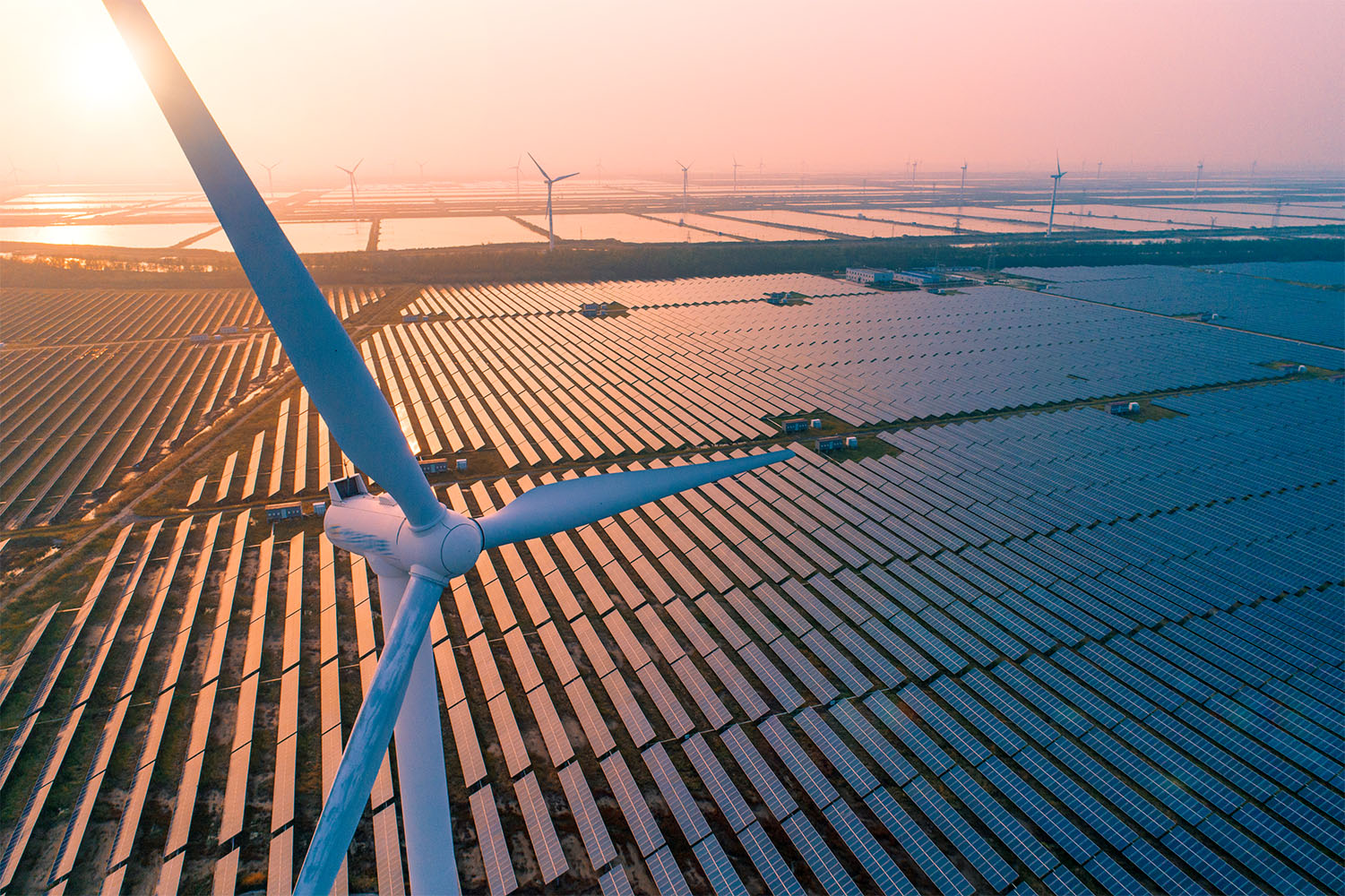
This week, we look at the new connections queue regime, DESNZ setting the AR7 budget to unlock new onshore wind and solar capacity and Ofgem's accelerated delivery of key electricity superhighways.
Ofgem finalises the connections queue reform
On 8 December 2025, a series of significant announcements were made by the National Energy System Operator (NESO) and Ofgem on GB connections reform.
Connections reform results
NESO published the results of its grid reform, officially clearing the previous backlog of non-viable projects and establishing a new pipeline of prioritised projects which are both ready to build and strategically aligned with national energy targets such as Clean Power 2030.
Projects that submitted their evidence by the application deadline of 26 August this year will have received an outcome notification from NESO or the Distribution Network Operator (DNO); those meeting the readiness and strategic alignment criteria will be prioritised and can expect to receive a "Gate 2" offer, while "Gate 1" offers will be issued to projects which are not prioritised (either as a result of failing to satisfy the Gate 2 criteria, failing to submit evidence on time, or where a project has affirmatively requested Gate 1 status).
Across delivery phase 1 (connections up to 2030) and phase 2 (2031-2035 connections), NESO claims to have unlocked 283 gigawatts (GW) of generation and storage and 99 GW in transmission-connected demand, which is expected to unlock up to £40 billion in annual sector investment. The results paint a varied picture for energy developers. While offshore wind and solar photovoltaic (PV) projects fared well in terms of being prioritised, over 150 GW of battery-energy-storage-system capacity has been deprioritised or removed from the connections queue due to the oversupply in specific regions and speculative applications generally.
CMP448 approved and disputes guidance issued
On the same day as the connections reform results, Ofgem published its decision to approve Connection and Use of System Code (CUSC) modification proposal (CMP) 448, introducing a progression commitment fee (PCF) for Gate 2 projects, and supplemental guidance on determinations for disputes arising from the Gate 2 to whole queue (G2tWQ) exercise. These measures are intended to keep the reformed queue aligned with Clean Power 2030 while discouraging speculative projects and clarifying the scope for challenge.
CMP448 introduces a PCF that is triggered where, over roughly five years, more than 6 GW of Gate 2 capacity is terminated for failing to reach the queue management milestone 1 (initial planning consent). Once activated at the discretion of NESO and Ofgem, Gate 2 projects that have not yet met milestone 1 must post security for the fee, which is triggered if they later terminate or reduce capacity before materially advancing planning and statutory consents. The PCF is set at £2,500/megawatt (MW) initially and ratchets up by £2,500/MW every six months to a ceiling of £10,000/MW, increasing financial pressure to either progress or step out of the queue.
Ofgem’s G2tWQ disputes guidance adopts a deliberately narrow approach, broadly reflecting the position trailed in its November 2025 consultation on the G2tWQ disputes mechanism. Parties cannot seek a determination merely because they disagree with NESO’s Gate 2 decision. This means NESO’s discretion is protected, and new contract terms will be presumed reasonable unless clear evidence shows a failure to follow the approved Target Model Option 4 (TMO4+) framework or a breach of regulatory duties. Policy choices, Clean Power 2030 limits and advancement outcomes are expressly out of scope, and distribution-connected parties can only target DNO process failures, not NESO’s decisions.
Before approaching Ofgem, developers must first exhaust all available options for alternative dispute resolution before going to Ofgem. Any determination request must then be filed via Ofgem’s gateway within 30 days, will usually be decided on written submissions, and available remedies are limited, with the ability to be re-added into the connections queue, and no financial compensation is available.
DESNZ announces onshore wind and solar budget for CfD AR7a
The Department for Energy Security and Net Zero (DESNZ) has announced the contract budget notice for all non-offshore wind technology projects bidding in the contracts for difference (CfD) allocation round 7a (AR7a). The budget covers both established (pot 1) and emerging technologies (pot 2).
Pot 1 includes energy from waste with combined heat and power, landfill gas, hydro (>5MW and <50MW), onshore wind (>5MW), remote island wind (>5MW), sewage gas and solar PV (>5MW), and has been allocated a maximum budget of £295 million for projects due to deliver in delivery years 2027/2028, or 2028/2029. This includes a ringfenced minimum budget of £160 million for onshore wind and remote island wind projects. A separate maximum budget of £295 million applies to solar PV, to ensure its clearing price is separated from other Pot 1 technologies.
Pot 2 includes advanced conversion technology, anaerobic digestion (>5MW), dedicated biomass with combined heat and power, geothermal, tidal (stream and wave), and has a maximum budget of £15 million for projects whose delivery year is 2028/29, or 2029/30.
Neither pot 1 nor pot 2 is subject to a capacity cap for the AR7a auction.
Compared with AR6, the pot 1 budget has reportedly increased by 15%. However, as we reported for the offshore wind budget for CfD AR7, levels of support have been calculated in 2024 prices, rather than 2012 prices, as used in previous allocation rounds.
Ofgem signs off on early investment and new dates for electricity super highways
Ofgem has announced updates to three significant transmission network upgrade projects, approving early investment and accelerated delivery timelines.
The first two projects are the Eastern Green Link (EGL) 3 and EGL4, proposed subsea cables between England and Scotland with 2GW of capacity each. The third project receiving early investment is the being the Grimsby to Walpole new connection (GWNC) project, which will connect the Lincolnshire areas via a 400kV onshore electricity line.
As a result of the updates, both EGL3 and EGL4 are now forecast to be delivered in August 2034, with GWNC targeting delivery in December 2033. Prior to such changes, Ofgem had expected the projects to be delivered in the late 2030s.
The accelerated timeline is a result of amendments to the scope of the projects, following extensive design proposal changes by transmission operators (TOs). These changes have been designed to minimise the impact on the community and the environment, while also reducing project risk and enabling lower costs. The changes were approved accordingly. Ofgem states that TOs will also be incentivised for delivering the projects earlier than the delivery targets and significantly penalised for late delivery.
As part of the announcement, Ofgem has also approved early construction and preconstruction funding for EGL3 and EGL4, which will enable the projects to proceed with required enabling works such as surveys and land procurement.
NESO has provided a cost-benefit analysis following these updates, which states that it is expected that together, the three projects will deliver between £3 billion and £6 billion in benefits to consumers, compared to the original proposed design.
This article was written with the assistance of Adam Budd, Oliver Derham, trainee solicitors and Tomisin Agbonifo, paralegal