
Wind power repowering and industrial self-consumption: the key elements of the draft Royal Decree the Spanish Government intends to approve
Published on 10 July 2026
MITECO has opened a public consultation period on the draft Royal Decree on urgent measures relating to grid access and the authorisation of installations.
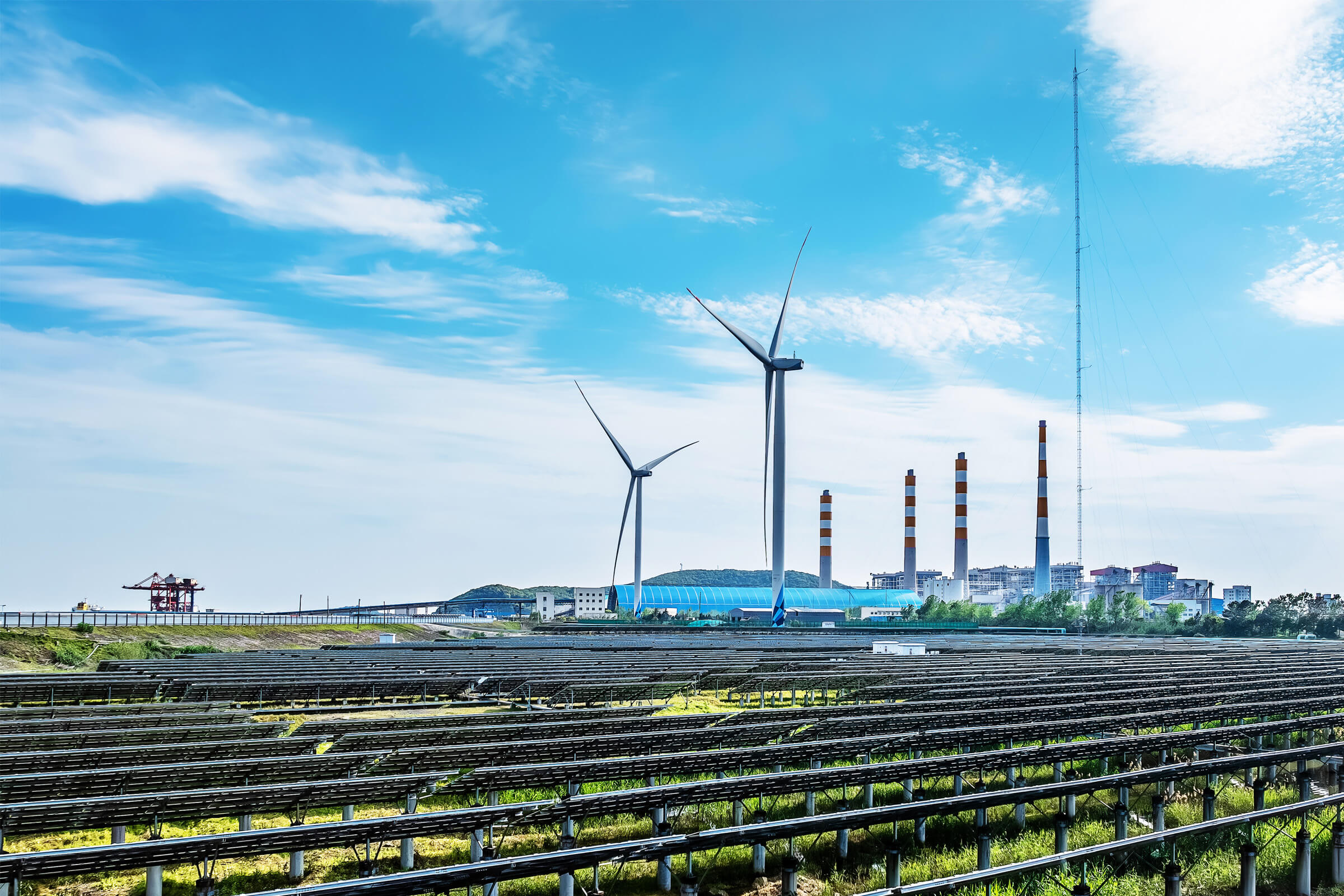
Royal Decree-Law 7/2026 of 20 March and Royal Decree-Law 18/2026 of 29 June introduced a set of urgent measures to address the energy crisis arising from the conflict in the Middle East. Within this framework, MITECO has submitted a new draft Royal Decree for public consultation and information, which complements this regulatory drive with measures aimed at enabling new grid access capacity, simplifying the authorisation of installations and improving the contribution of renewables to the electricity system. The deadline for submitting allegations is 13 July 2026.
Below is our preliminary analysis of the measures set out in the draft royal decree.
Repowering of wind farms
The draft enables the release of access capacity at transmission network nodes reserved for competitive tendering, provided that it is intended for repowering works on wind farms. The most relevant elements of the procedure set out in the draft are as follows:
- Only the owners of wind farms in operation at the time the Royal Decree comes into force may apply for this capacity, for the sole purpose of carrying out repowering works in accordance with Article 7 of Royal Decree 997/2025.
- An increase in access capacity may be requested, but this increase may not exceed 50 per cent of the current access capacity of each installation.
- The release of capacity is conditional upon the prior release of up to 10 per cent of the total available capacity at the node, in accordance with the mechanism set out in the tenth additional provision of Royal Decree-Law 7/2026.
- Applications for access and connection permits must be submitted within three months of the capacity release decision and are processed jointly at the end of that period, without any order of priority. Each application must specify a minimum admissible capacity.
- If the capacity requested exceeds that available at the node, it shall be allocated in proportion to the increase requested in each application. Applications for which the allocation is less than the declared minimum admissible capacity shall be rejected, and a new allocation shall be made amongst the remaining applications.
- Repowering projects that are allocated capacity shall be subject to the simplified regime set out in Articles 21 and 22 of Royal Decree-Law 7/2026, even where the increase in installed capacity exceeds 25 per cent of the original capacity.
- Any unallocated capacity that has been released shall be returned to the reserve for the tender process.
Renewable self-consumption for large industrial demand facilities
The draft Royal Decree sets out a complementary mechanism to release capacity at nodes reserved for tender, intended for renewable self-consumption installations linked to industrial demand facilities. The main conditions that must be met for this release to take place are as follows:
- Capacity may only be released at nodes not already included in a wind repowering procedure and where the capacity released under the tenth additional provision of Royal Decree-Law 7/2026 is insufficient to meet the applications received.
- The generation installation must be linked to a demand facility through one of the self-consumption arrangements regulated by Royal Decree 244/2019.
- The demand facility must carry out an activity falling within Section C (Manufacturing Industry) of the 2025 National Classification of Economic Activities. Other activities are excluded, including data centres, which fall within Section K.
- Both the generation facility and the demand facility must be connected directly to the same node on the transmission grid. If the demand facility is newly established and does not yet have an access contract, it must obtain a demand access capacity permit prior to submitting the generation application.
- The deadline for submitting applications will be two years from the date the Royal Decree comes into force.
- The capacity to be released at each node will be limited strictly to that which is necessary to meet the applications submitted.Amendments to Royal Decree 1955/2000
Amendments to Royal Decree 1955/2000
The draft amends Royal Decree 1955/2000 in five areas:
- The installation of Dynamic Line Rating (DLR) systems on overhead lines is now considered an activity exempt from environmental assessment, provided that it does not involve structural modifications to the route, supports, conductors or cross-arms.
- The sole transmission operator and distribution companies with more than ten years’ activity, as well as developers of generation or storage facilities that have received a favourable report from the CNMC within the last year in relation to projects using the same technology, are exempt from the requirement for a report verifying legal, technical and economic capacity to be carried out by the CNMC (a report which is replaced by a responsible declaration).
- The single-node coverage analysis is abolished for facilities applying for closure without having been successful bidders in capacity auctions through which the system has met the reliability standard.
- The public consultation period for public utility declaration proceedings is extended from thirty to forty-five days, with publication on the electronic portal and in digital media.
- As an exceptional measure, pumped-storage facilities that incorporate power electronics during the processing of their applications may be considered to use the same technology for the purposes of access permits.
Other measures relating to renewables
The voltage control regime set out in Royal Decree 413/2014 is updated so that renewable energy installations actively contribute to this service and the reliance on fossil fuel power stations is reduced. The remuneration arrangements applicable to solar thermal installations with a specific remuneration scheme that incorporate thermal storage or expand their solar field are regulated, with no entitlement to remuneration in addition to the investment initially granted. The Secretary of State for Energy is also authorised to establish the methodology for monitoring the production ramp limitations of type C and D generation modules.
Miscellaneous
Among the other measures included in the draft royal decree, the amendment to Royal Decree 1434/2002 stands out, requiring improvements regarding access to the CNMC’s electricity comparison tool, which must be included on bills; these bills must also include information on the origin and environmental impact of the gas supplied, in transposition of Directive (EU) 2024/1788. During the transitional period, suppliers must include in their bills an explicit reference to the percentage of biomethane associated with Guarantees of Origin for supply to end consumers in the domestic market during the previous year. Furthermore, an additional component is being incorporated into the reference price for gas in the Canary Islands and Melilla, in compliance with a court order from the Supreme Court.
For further information on the draft royal decree or any matters relating to public law and regulated sectors, please do not hesitate to contact one of our experts or your usual contact at Osborne Clarke.