
New framework for energy sustainability, environmental sustainability, resilience and digital sovereignty in data centres
Published on 24 November 2026
Royal Decree 1032/2026 makes access to and connection of data centres subject to requirements relating to efficiency, renewable energy coverage and digital sovereignty, and establishes a transition regime for projects currently under development.
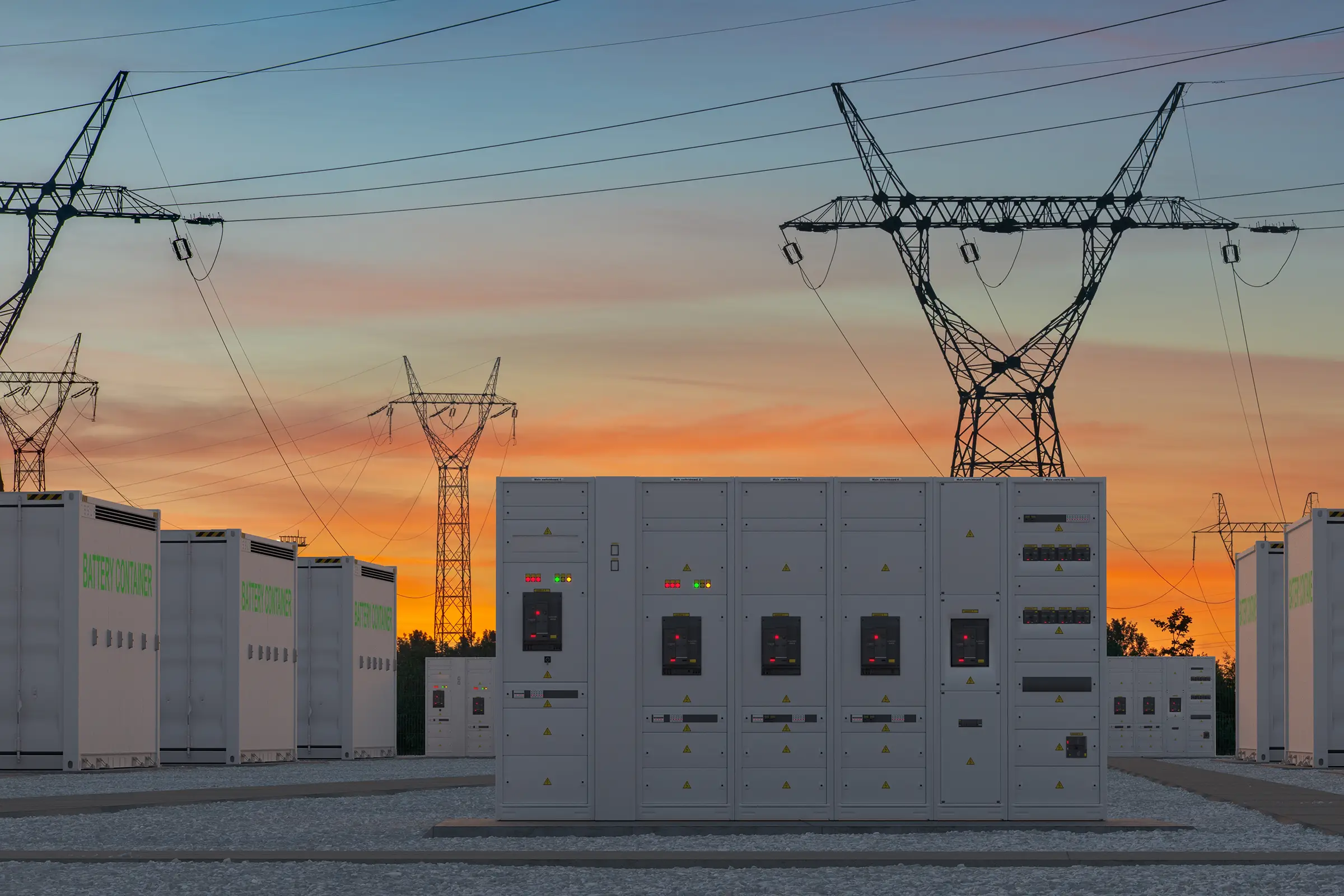
Royal Decree 1032/2026 of 20 November, regulating the requirements for energy sustainability, environmental sustainability, resilience and digital sovereignty applicable to data centres (the “Royal Decree”), implements the first additional provision of Royal Decree-Law 7/2026 of 20 March, which approves the Comprehensive Plan for Responding to the Crisis in the Middle East. The regulation, in force since 22 November 2026, governs the conditions for applying for and obtaining permits for access to and connection to electricity grids, as well as the publication of information on efficiency and sustainability.
The Roadmap "Accelerating Digital Sovereignty in Spain", published by the Ministry for Digital Transformation and the Civil Service, proposes the adoption of legislation on sustainable data centres that combines energy and water efficiency, territorial cohesion, job creation and economic growth. Below, we outline the most significant measures contained in the legislation.
Scope of application
The Royal Decree applies to operators or, failing that, to the owners of data centres with an electrical access capacity of 10 MW or more. It also applies to groups of data centres which, being in the same location and under the same ownership, collectively reach that threshold. The obligations to publish information on energy efficiency and sustainability apply to data centres whose IT power is 500 kW or more, regardless of their access capacity. The digital sovereignty requirements apply to data centres subject to the Royal Decree, regardless of their access capacity, when they host "HIGH" (ALTA) category information systems.
In facilities where the main activity is not the provision of data centre services, only the access capacity allocated to that activity is taken into account.
The Royal Decree applies to new applications, to applications pending or suspended due to a demand capacity tender, and to permits granted to data centres that are not yet connected.
Facilities used exclusively for defence, civil protection and public safety are excluded, as are those owned by state public sector bodies that are critical operators or are affiliated with them.
Requirements for obtaining access and connection permits
In addition to complying with the provisions of Royal Decree 1183/2020 of 29 December, on access to and connection to electricity transmission and distribution grids, the application for access and connection must include a declaration of compliance on digital sovereignty, a statement of commitment regarding energy and water efficiency or, where applicable, the corresponding European label, and a statement of commitment regarding the requirements for additionality and hourly correlation:
a. Digital sovereignty: the data centre owner must submit, to the grid operator and simultaneously to the Ministry for Digital Transformation and the Civil Service, a declaration of compliance stating that the data centre does not host "HIGH" category information systems, in accordance with Annex I of Royal Decree 311/2022 of 3 May, which regulates the National Security Scheme; or, if it does host such systems, that it complies with the conditions set out in Article 5.2 of the Royal Decree. These conditions include, subject to the exceptions provided for in the regulation, that content data and data derived from the use of the service must not be processed, stored or transferred outside the European Union or the European Economic Area.
b. Energy and water efficiency: the operating entity or the owner of the data centre must demonstrate that the infrastructure meets the required standards. With regard to water efficiency, the target is "Class A" on the European label, in accordance with the terms set out in the delegated regulation adopted pursuant to Directive (EU) 2023/1791. With regard to energy efficiency, the highest category resulting from the methodology set out in the fourth additional provision of the Royal Decree is required. These levels must be achieved within one year of the data centre becoming operational, in the case of water efficiency, and within two years, in the case of energy efficiency.
Until the European labelling system becomes applicable and the standardisation methodology for the energy indicator is rolled out, transitional values of PUE equal to or less than 1.25 and WUE equal to or less than 0.1 shall apply. Furthermore, data centres that have entered into an ATR contract before 1 January 2029 must maintain a PUE of 1.25 or less until 31 December 2031. From 1 January 2032, the methodology set out in the fourth additional provision shall apply to them.
c. Additionality: data centre operators or owners must demonstrate that they meet 80 per cent of their total consumption through self-consumption or forward renewable electricity purchase agreements from producers who own renewable energy generation and storage facilities located in Spain. As a general rule, installations must have a commissioning certificate issued no more than 36 months prior to the data centre becoming operational or the first use of the relevant energy.
Photovoltaic installations may be used to meet this requirement regardless of their commissioning date, provided that they had not entered into forward renewable electricity purchase agreements at the time the Royal Decree came into force. Certain repowering projects may also be taken into account, provided they require a substantial revision of the connection agreement, as well as installations in categories b.6, b.7 and b.8 that have benefited from the specific remuneration scheme and have reached the end of their regulatory useful life.
For these purposes, a data centre is deemed to come into operation when the ATR contract is concluded with the grid operator.
d. Hourly correlation: operators or owners of data centres must ensure that, in each hour, at least 80 per cent of consumption is backed by an equivalent volume of renewable electricity generated in that same hour. This backing may be provided through self-consumption, forward renewable electricity purchase agreements or storage facilities, in accordance with the rules of the Royal Decree.
The forward contracts for the purchase of renewable electricity used must meet a number of criteria. Among other things, they must identify the associated facilities and the coverage formula and volume, have a minimum duration of six years and be formalised in a public deed. Forward products traded on organised markets where the renewable origin is certified exclusively by guarantees of origin are not valid.
Operators or owners of data centres must submit information on energy efficiency and sustainability, which will be published on the website of the Ministry for Ecological Transition and the Demographic Challenge. Data centres with an information technology capacity of 1 MW or more must also state whether they take into account the best practices set out in the European Code of Conduct on Energy Efficiency and, if they do not apply them, justify why.
Compensation payments and penalty regime
Deviations from the requirements regarding additionality and hourly correlation give rise to compensation payments, irrespective of the penalty regime. For additionality, the amounts are 25, 19, 12 or 6 €/MWh, depending on whether the additional coverage is less than 20 per cent, 20 per cent or more but less than 40 per cent, 40 per cent or more but less than 60 per cent, or 60 per cent or more but less than 80 per cent. For correlation, the compensation ranges from 2 to 16 €/MWh, depending on the average monthly deviation percentage. The operator shall issue provisional invoices for the compensation payments each month. By 31 March of each year, the Secretary of State for Energy shall approve the final amounts corresponding to the previous calendar year, upon the proposal of the system operator. The revenue shall be used to cover the costs of remuneration under the capacity mechanisms and, where applicable, any additional costs for consumers.
Failure to comply with the requirements set out in the Royal Decree shall be penalised in accordance with the Electricity Sector Act, Act 18/2014 of 15 October, and Royal Decree-Law 7/2026 of 20 March, depending on the requirement breached, in addition to any other regulations having the force of law that may be applicable. Permits may only be suspended or revoked in the circumstances, within the limits and in accordance with the procedures laid down by law.
Waiver of access and connection permits
The second additional provision allows for the withdrawal, during the six months following the entry into force of the Royal Decree, of pending applications or of access and connection permits already granted for installations not yet connected. Such a waiver shall not entail the enforcement of the guarantees deposited pursuant to Article 23 bis of Royal Decree 1183/2020 or the third transitional provision of Royal Decree-Law 8/2023 of 27 December. The regulation does not address the treatment of amounts paid as capacity reservation fees; we therefore understand that these will not be refunded in the event of a waiver under this provision.
Alternative compliance with the requirements of additionality and hourly correlation
The sixth additional provision deems the requirements of additionality and hourly correlation to have been met when the national renewable generation share for year n-2 exceeds 90 per cent, where n is the year in which the permit is applied for. In that case, the permit will be subject to an annual cap on grid consumption hours, calculated by multiplying the total number of hours in the year by the renewable generation share for year n-2. Once the threshold has been exceeded in a calendar year, the share will be deemed to be above 90 per cent for the following five calendar years.
Transitional arrangements relevant to project development
Previous applications and permits: from the entry into force of the Royal Decree, applications that are pending or have been suspended following a tender process have three months to demonstrate compliance with the requirements. If they fail to do so, they will be refused following a request for rectification and a hearing.
Permits granted to unconnected centres have six months to demonstrate compliance with the requirements, with the exception of those set out in Article 5. Failure to demonstrate compliance will result in the permits lapsing and the forfeiture of the guarantees deposited, without prejudice to the possibility of withdrawal indicated above. For centres that are to house ‘HIGH’ category information systems, a period of twelve months is provided for them to comply with the conditions set out in Article 5.2 and to submit the corresponding declaration of compliance. Failure to comply with these conditions shall not result in the expiry of the permits or the enforcement of the guarantees.
For these purposes, data centres shall be deemed to be connected once they have been electrically connected to the transmission or distribution grids and the relevant ATR contract has been signed.
Flexibility and additionality: for five years from the date of entry into force, data centres may opt for transitional compliance with the hourly correlation requirement by qualifying to participate in the automatic power reduction system (SRAP). They must be able to reduce their consumption to zero when the system is activated. Compliance with the hourly correlation requirements will be phased in progressively: until 31 December 2028, 60 per cent of the energy consumed in each hour of the P1 period; from 1 January 2029 until the end of the transitional period, 70 per cent in P1 and 60 per cent in P2. Only facilities that come into operation before 31 December 2030 will be eligible for this option.
Once the transitional period has ended, the general 80 per cent requirement set out in Article 8 will apply.
Furthermore, until 31 December 2028, owners have six months from the date the ATR contract is formalised to meet the additionality requirement.
If you would like further information on this regulation, please do not hesitate to contact our experts or your usual contact at Osborne Clarke.