The Energy Transition | NESO allows extensions to Gate 2 offer signing deadlines
Published on 16 June 2026
Welcome to our top picks of the latest energy regulatory and market developments in the UK's transition to net zero
This week's edition explores NESO's confirmation that certain customers involved in the connections reform re-offer process may request a four-week extension to their Gate 2 offer signing deadline, the government's call for evidence on community batteries, and the government's consultation on the draft National Policy Statement for Fusion Energy Generation.
NESO allows four-week extension to Gate 2 offer signing deadline
The National Energy System Operator (NESO) has confirmed that certain customers involved in the "re-offer" process will be able to request a four-week extension to the 90 calendar day window for accepting their new grid connection offers issued as part of the Gate 2 to Whole Queue (Gate 2) process.
This extension will be available to projects whose initial offers contain material errors and where NESO and/or the relevant transmission owner(s) (TOs) need to carry out further work to issue a corrected offer. The grant of any extension will be contingent on NESO first being able to obtain a corresponding extension to the relevant TO's offer to NESO, where applicable.
The scope of re-offer has not yet been defined, and the NESO announcement does not provide an indication of the timelines for an extension application to be assessed, so further clarification is still anticipated. However, it has confirmed that the extension will be available only to customers whose projects have received protection under protection clauses 1 or 2a (and therefore have connection dates prior to 2028).
Customers who face extenuating circumstances and require a further extension following the initial extension, or who need extra time for reasons other than a re-offer issued to correct material errors, may still be able to obtain an extension. This will be considered by NESO on a strictly case-by-case basis.
All extension requests should be raised through the Connections Portal.
UK government launches call for evidence on community batteries
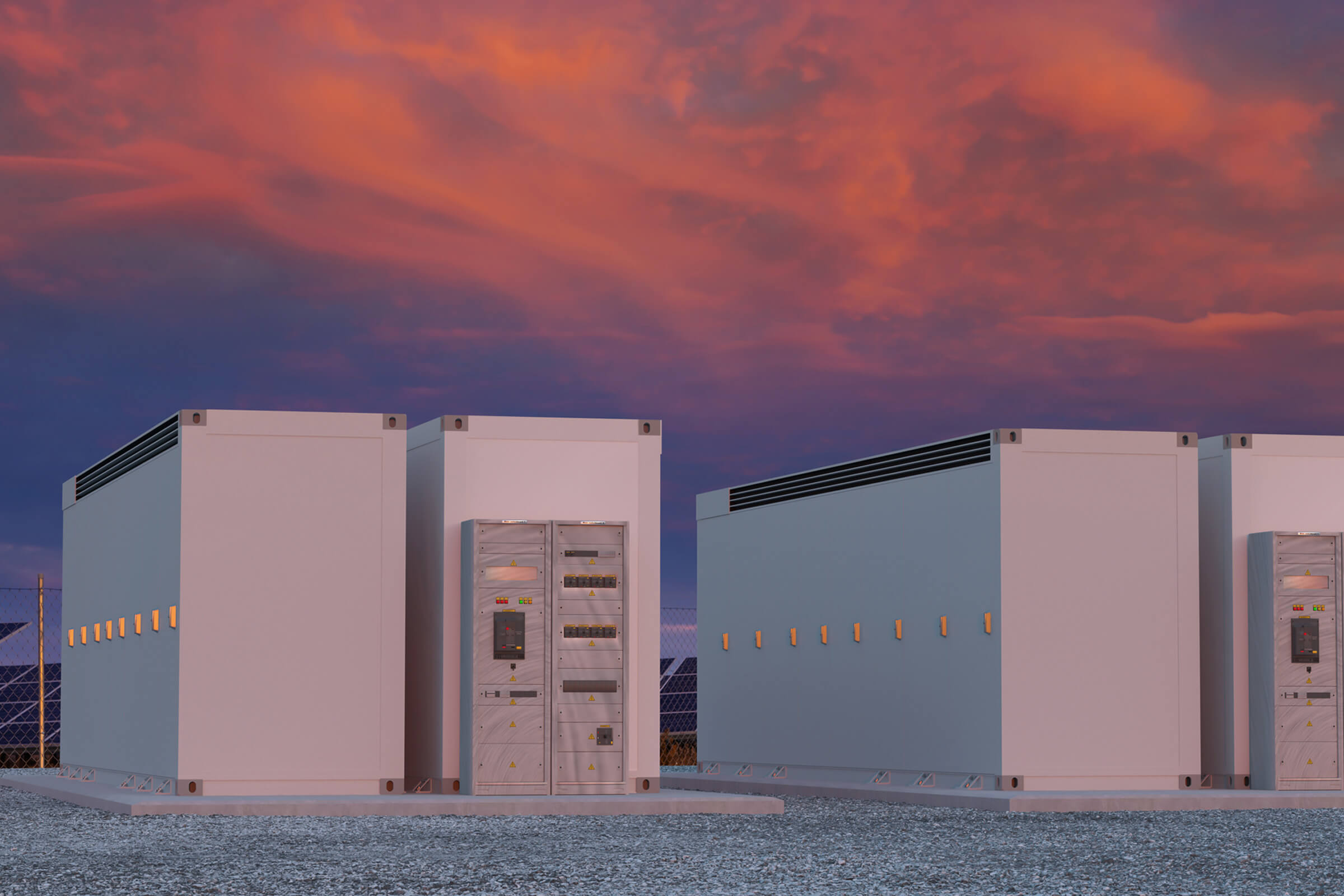
The government has issued a call for evidence to assist its analysis of the current landscape for community batteries. The call for evidence highlights that there is no uniform definition of community batteries, but that this is intended to cover instances where batteries are installed to store power for multiple homes, with each household sharing in the direct bill savings. The government is assessing the possibility for community batteries to be scaled up to extend the benefits of the energy transition to those who previously may not have had the opportunity.
The call for evidence builds upon the government's Clean Power 2030 Action Plan, which identified consumer-led flexibility as a key enabler of that ambition.
The government highlights that while there is currently around 1.6 GWh of home battery capacity across approximately 299,000 households in Great Britain, many consumers lack the necessary space and upfront capital to install a battery in their own home. Many consumers are therefore precluded from sharing in the benefits of domestic energy storage and participating in consumer-led demand flexibility, with the call for evidence citing, for example, those who live in flats or low-income households. Community batteries offer a potential means of overcoming these barriers on a larger scale.
The call for evidence sets out the government's initial thinking on how community batteries could deliver value, including shifting consumption away from peak times, local grid management, and enabling new residential developments to connect to constrained areas of the network.
The government also seeks views on the main barriers it has identified to the upscaling of community batteries, including technical complexity, grid connection and high upfront costs, coupled with the need to share investment risks and returns among multiple users.
The government has confirmed that community batteries will be eligible for funding from the Local Power Plan, which is providing up to £1 billion of funding over the current spending review period.
Responses can be submitted online here or emailed to electricitystorage@energysecurity.gov.uk. A summary of responses will be published following analysis.
Government opens fusion energy strategy consultation
Following the publication of the UK's Plan for Delivering Fusion Energy in March of this year, the government has opened its consultation on the draft National Policy Statement (NPS) for Fusion Energy Generation (EN-8). The consultation invites members of the public, industry stakeholders, non-governmental organisations and other organisations and public bodies to share their views on the draft EN-8, and the accompanying environmental assessments.
The draft EN-8 encompasses all "fusion energy infrastructure" and any related infrastructure project which is either defined as nationally significant and/or is subject to development consent under sections 35 and 35ZA of the Planning Act 2008. Currently, to be determined as nationally significant, capacity must exceed 50MW in England and 350MW in Wales, with a government proposal to extend this to include "thermal capacity, or a combination of thermal and electrical capacity, of over 50MW". It is designed to fit within the Overarching National Policy Statement for Energy (EN-1) together with other NPSs (such as EN-7 for nuclear fission energy generation) in order to help local planning authorities draft local impact reports.
The draft EN-8 sets out the principles used to evaluate applications for development consent in relation to fusion energy projects and lists the criteria particularly relevant to fusion projects, which largely reflect the assessment principles and relate to "environment, safety and security, operational and developmental" aspects of the projects.
Responses to the consultation will be reviewed in autumn 2026, which, along with parliamentary feedback, will feed into the revised draft expected to be published in winter 2026. The government response and EN-8 designation is set for spring 2027.
The consultation is open until 17 August 2026, and responses should be submitted through the e-consultation platform Citizen Space. Any enquiries regarding the consultation should be directed to fusionregulation@energysecurity.gov.uk.
This Insight was written with the assistance of Elise Hill, Maggie Hudson and Alice Smith, trainee solicitors.